
What happens to your neck during 15 minutes with RecoRest
A plain-language explanation of where neck tension comes from and how traction, heat and vibration help release it.
Stiff neck and neck hump: where do they come from?
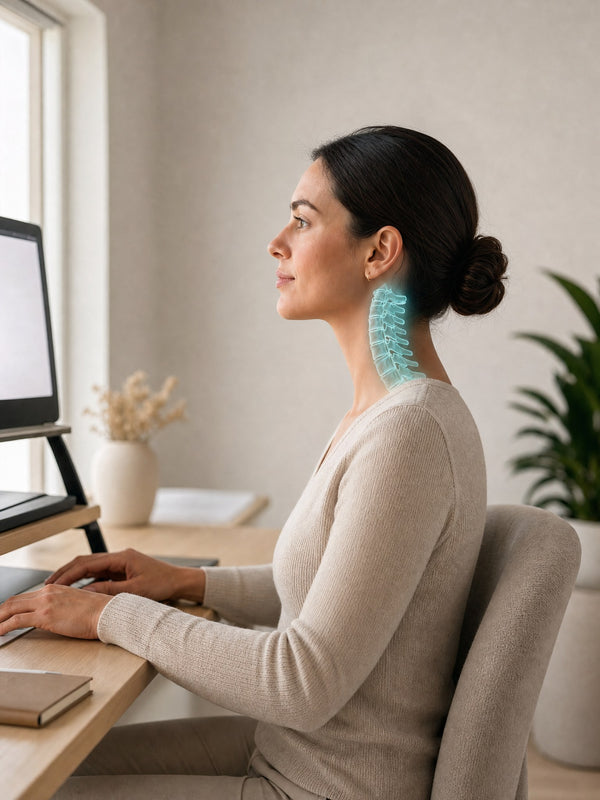
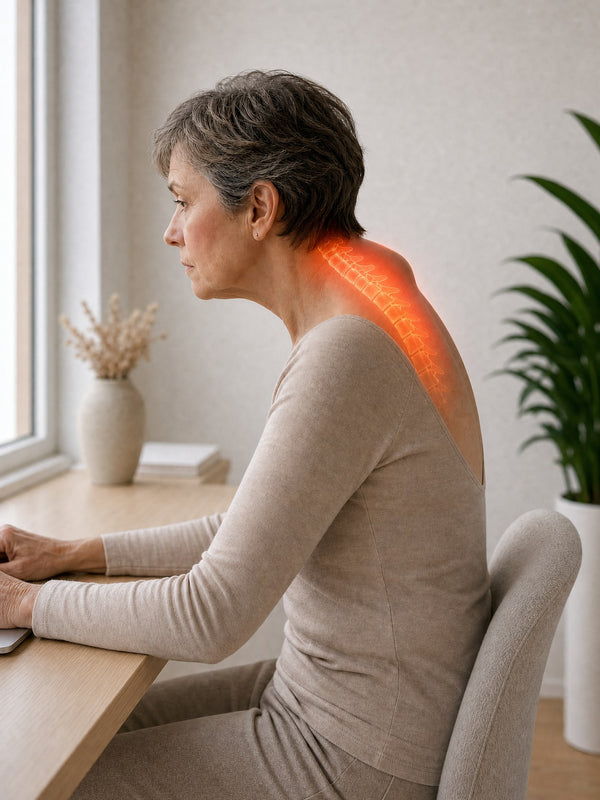
The cervical spine naturally curves slightly forward (the so-called cervical lordosis). This curve works like a shock absorber and spreads the weight of your head.
When we sit hunched over for hours – at a desk, behind the wheel, over a book or in the kitchen – the head moves forward, the curve flattens and the neck muscles work non-stop to hold it up. With age and weaker muscles, this habit sets in more and more easily. The result: stiffness, pressure at the base of the skull, headaches and, over time, a "neck hump".

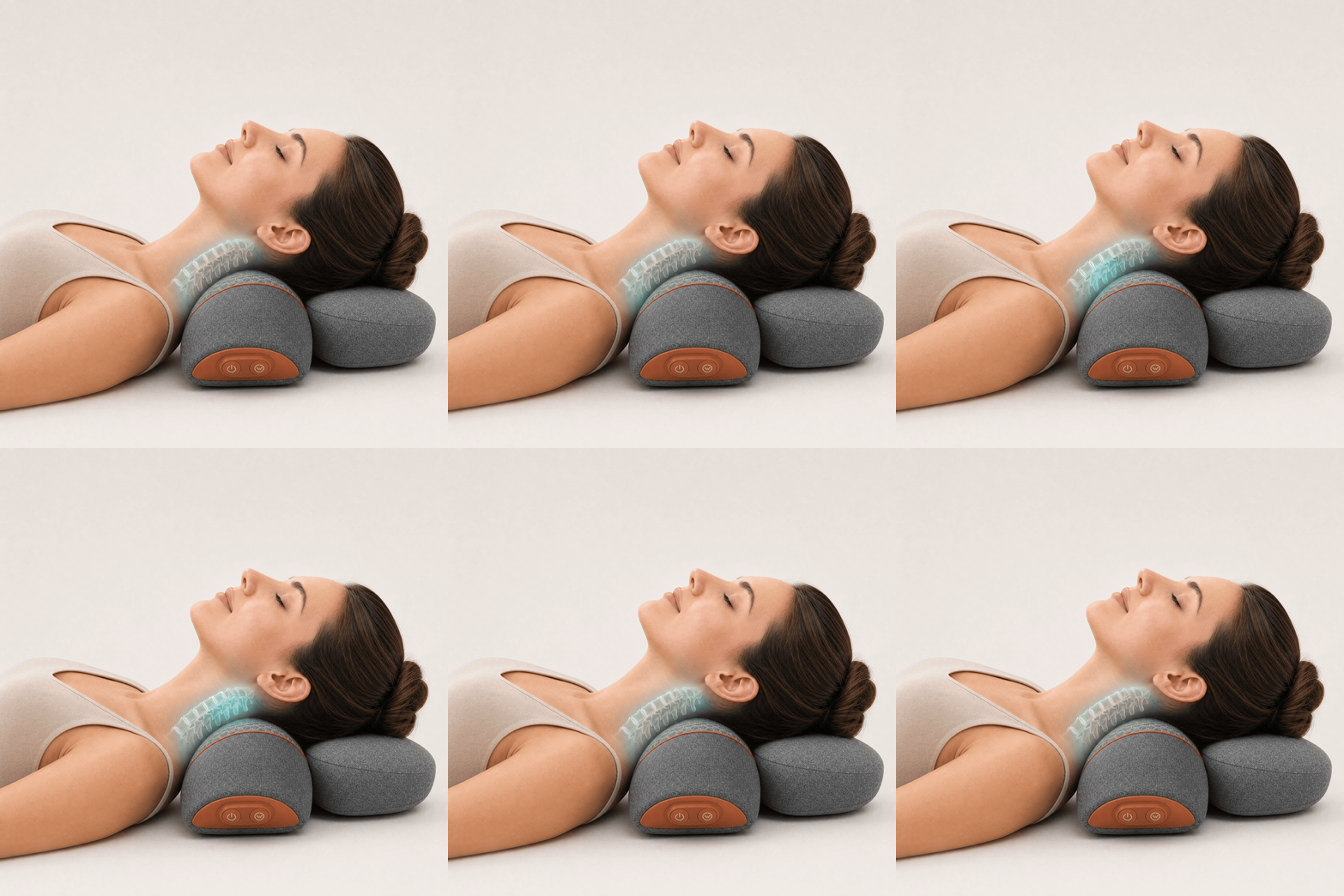
Cervical traction at 26°
The device gently lifts and stretches the cervical spine at the angle physiotherapists use when working with the spine. This creates more space between the vertebrae and helps restore the natural curve of the neck.
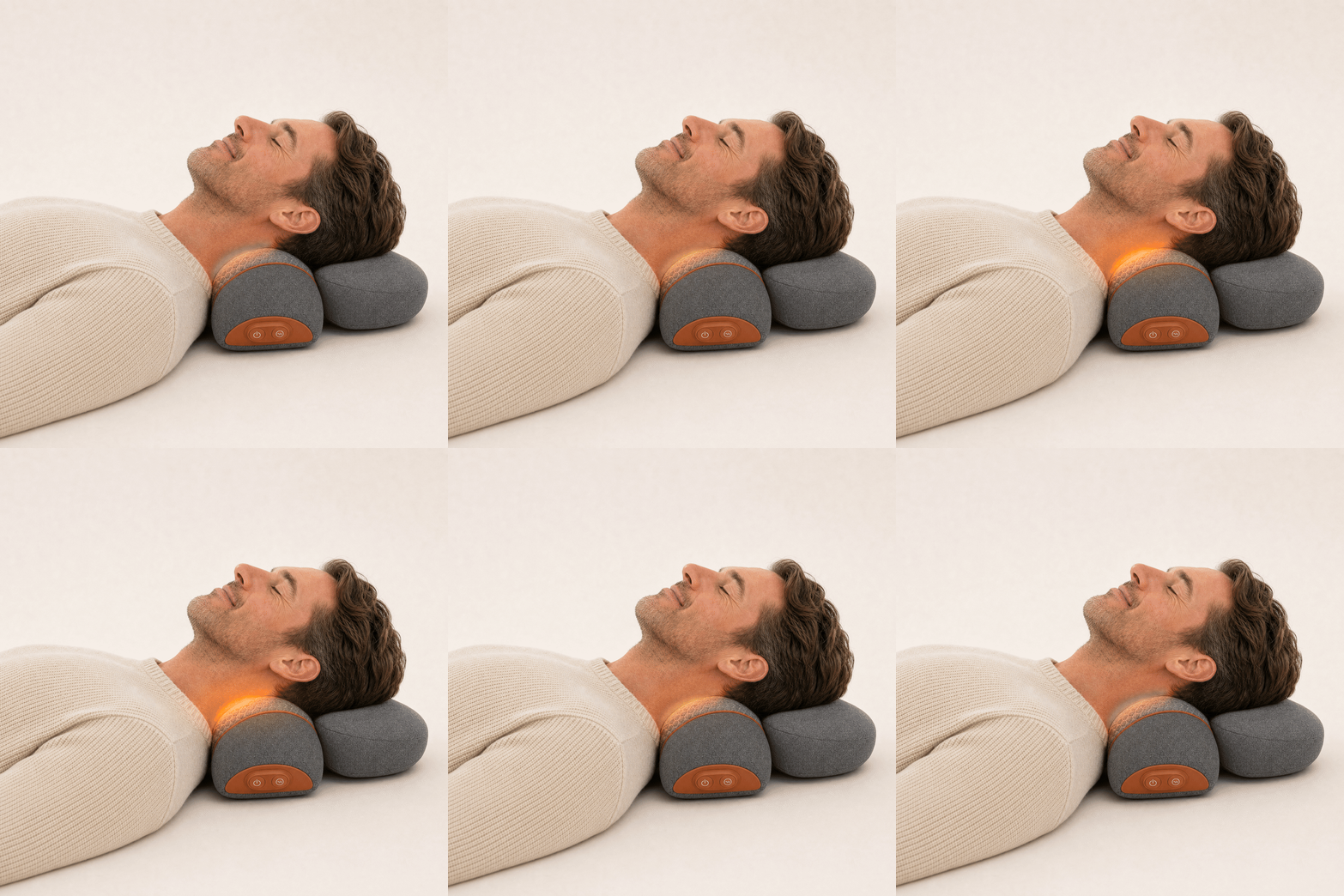
Heat therapy
Built-in heating elements warm your neck to a safe, controlled temperature. The heat penetrates deep into the muscles and makes them easier to relax, something massage alone can't do.
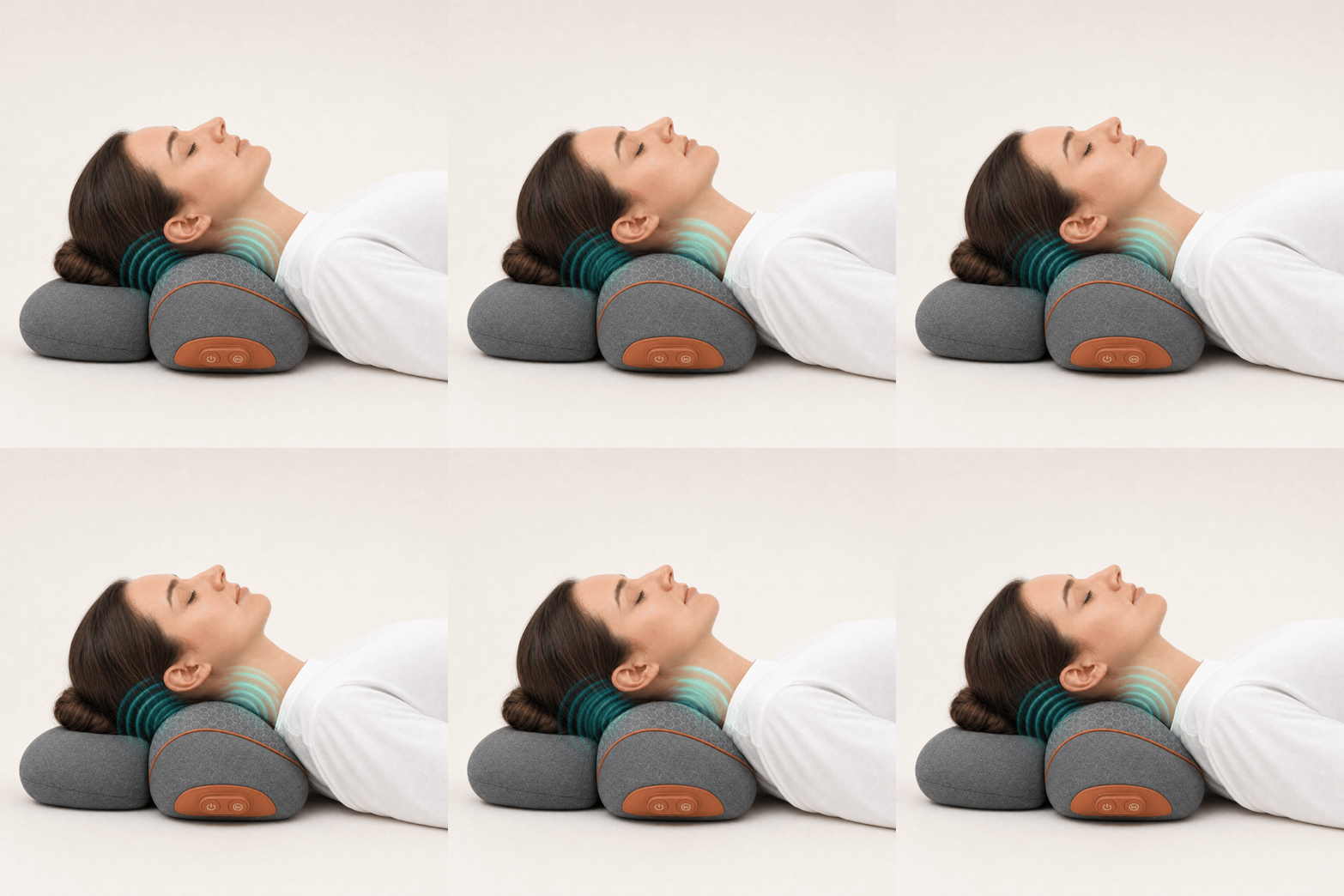
Vibration massage
Adjustable vibration works on tense muscle fibres and trigger points. It helps break up the knots that form from sitting at a desk and from stress.
What does a neck massager with traction do? Benefits for your neck
Less tension in your neck
Stretching combined with heat helps relax the muscles that stay tense all day.
Relief from headaches
Relaxing the muscles at the base of the skull may ease tension headaches that start in the neck.
Better neck mobility
Easier to turn your head, look up or check over your shoulder when driving.
Support for better posture
Regular traction supports the natural curve of the neck that we lose over years of hunched posture.
More restful sleep
A relaxed neck in the evening means falling asleep more easily and less morning stiffness.
A moment just for you
15 quiet minutes after work help reduce the stress that also "sits" in your neck.
How to start to get the most out of it
Consistency is key. A short daily session does more than a long one every now and then.
Getting used to it
5–10 minutes a day on lower settings so your neck can get used to the traction.
Daily routine
15 minutes a day, ideally at the same time, e.g. in the evening after work.
Maintenance
3–4 sessions a week, or whenever your neck starts acting up again.
When to talk to a doctor before use
If you have recently had spinal surgery or an injury, have been diagnosed with spinal instability, osteoporosis or cancer, or have a pacemaker or another implanted device, talk to a doctor or physiotherapist before use. The device is not intended for children under 10, pregnant or breastfeeding women, or people with high blood pressure, diabetes or skin allergies. Stop the session if you feel pain, numbness or dizziness.
Ready to give your neck a rest?
349 zł instead of 599 zł · Free delivery · 14-day returns
Order RecoRest